
Native silver is among a handful of minerals that have been deemed inherently valuable by mankind since antiquity. In fact, the practice of mineral collecting was first recorded in the late 1400s, and the earliest known mineral specimens ever collected are two examples of silver from Saxony, Germany.
Today, silver specimens (and silver sulfosalts) are considered “classics” in the mineral collecting community and have a devout, cult-like following, making them timeless collectibles.
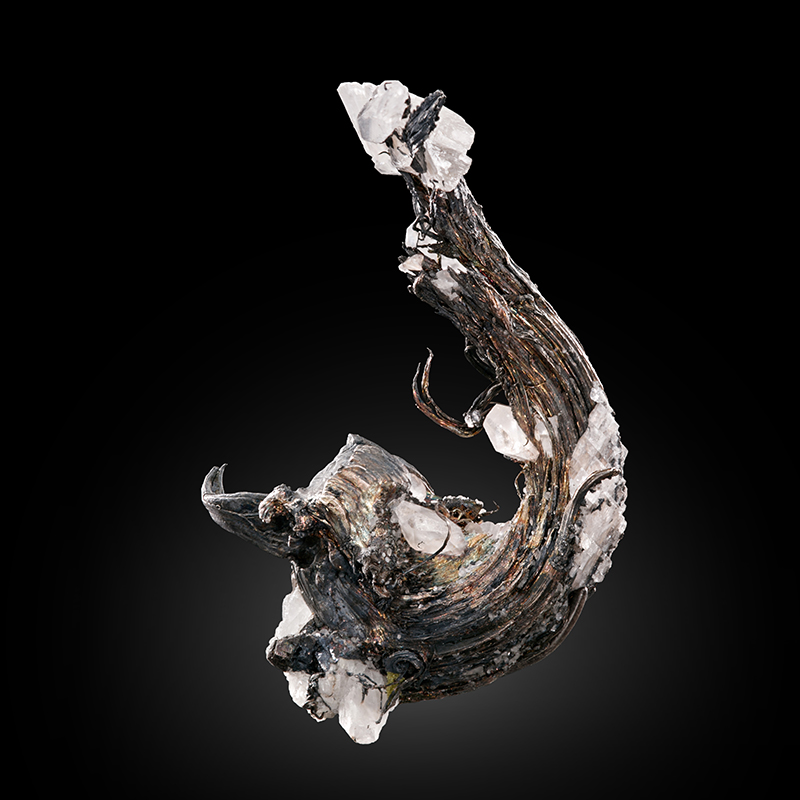
This striking silver wire specimen is composed of an amalgamation of numerous, thin, naturally bound wires that create a thick, curving form. Proportionate and dramatic, it tapers towards its tip, giving it the likeness to a curving horn. A rich and multi-colored patina intensifies this likeness and defines the many delicate wires within for added texture and depth. Colorless, well-formed calcites, with their icy translucence and luster, add a dramatic yet complementary contrast to the silver, making for a dynamic and attractive display.